BATTERY 2030+ at the heart of a green connected society | | | | | | Welcome to our new newsletter!The vision for BATTERY 2030+ is to invent the batteries of the future, providing European industry with disruptive technologies and a competitive edge across the full value chain, that will enable Europe to take the lead in battery science and technology.
This newsletter gives you an update on what's going on within the initiative. Enjoy your reading!
| | | |
A moment with our Director Patrik Johansson It's finally time to recharge our batteries (how many times
have you heard that one?).
It has been a hectic Fall not only as we have entered the
final year of Battery2030+, but also as we have become more aware than ever
that our voice is needed; for longevity - the updated Roadmap; for working
across Europe - the new projects of Battery2030+, the member state workshops
and the workshop in Brussels with the Faraday Institute; and for impact and
competitiveness - working with BEPA and
Recharge on the BID conference and supporting the "A Battery Deal for
Europe". And then the next MFF has cast a long shadow on it all.
So: Let's come back 2026 ready to take on the huge and
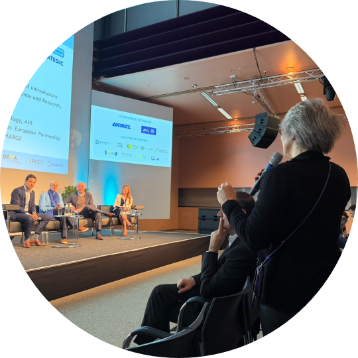
important tasks ahead of us with 100% SoH. | | | Battery Innovation Days 2025 The fifth BID, Battery Innovation Days, gathering European battery research, innovation, policy and industry, took place in Graz, Austria in the beginning of December. We got together to discuss how cell development can speed up, battery packs be cheaper, and how new kinds of batteries, like sodium batteries, can reach the market and contribute to Europe’s competitiveness.
| | | | | | | Battery 2030+ Excellence Seminar
Guest speaker Linda Nazar January 13th at 15:00 CET
| | | Take off for a strategic research battery plan for Sweden, based on the Battery 2030+ roadmap
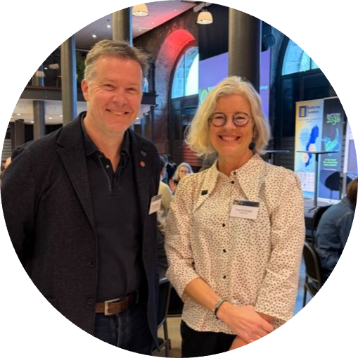
Some eighty people gathered at Münchenbryggeriet in Stockholm on November 27 for a workshop to kick-off the making of a Swedish strategic plan for battery research
| | | | | | | Battery 2030+ PublicationsAre you keeping up with all the publications from Battery 2030+ and our projects? We are constantly working on getting our research and results available. | | | Meet our new project Angelic!ANGeLiC: ALD-protected Next Generation Lithium-Sulphur Battery Cell Europe's path to transport decarbonisation has a heavy-duty problem. While electric cars are becoming commonplace, trucks and buses remain stubbornly diesel-dependent at 96% of the market, yet account for over a quarter of transport emissions. With new EU regulations demanding dramatic emission cuts by 2040, the race is on for battery technology that can power the heaviest vehicles on our roads. The ANGeLiC project is developing lithium-sulphur chemistry as a solution. By replacing expensive, supply-constrained metals like cobalt and nickel with abundant sulphur, Li-S batteries promise a compelling combination: lighter weight, lower costs, and stronger sustainability credentials. The catch? Technical hurdles have hindered the development of Li-S batteries, particularly issues such as the polysulfide shuttle effect and dendrite formation, which limit their effectiveness and safety. ANGeLiC's approach centres on atomic and molecular layer deposition technologies to create ultra-thin protective coatings for battery components, addressing these fundamental challenges while ensuring the manufacturing processes can integrate with existing production infrastructure. The project brings together 11 partners across Europe to advance Li-S technology from laboratory concepts toward practical application, developing cells that combine high energy density with improved recyclability. Running through November 2028, this Horizon Europe initiative contributes to Europe's competitive battery value chain and supports Battery2030+'s Battery Interface thematic area. | | | | | Battery 2030+ Excellence SeminarsIf you missed any of our fantastic seminars, do not fret! We have recorded them and you can watch them on our website. Click the button below and watch them all! | | | Horizon Europe Work Programme 2026-2027 - 8. Climate, Energy and Mobility - Calls
HE WP 2026-7
- Sum of interesting calls:
HORIZON-CL5-2026-09-D2-01: Producing battery-grade materials for electrodes through sustainable processing and refining of raw materials or developing bio-based materials (BATT4EU Partnership) RIA 7.1/28.3 M€ TRL4-5
HORIZON-CL5-2026-03-D2-02: Development of direct recycling processes (BATT4EU Partnership)RIA 4.7/14.2 M€ TRL5
HORIZON-CL5-2026-10-D2-03: Integrated Production and Product Development for Next-Generation Lithium-based Batteries for Mobility (BATT4EU and Made in Europe Partnerships)IA 33.3/100 M€ TRL6-7
HORIZON-CL5-2026-09-D2-04: Coordinated topic with India on recycling of EV batteriesIA 9.4/9.4 M€ TRL7-8
HORIZON-CL5-2027-02-D2-05: Improvement of Adaptability, Flexibility and Efficiency of Existing Recycling Processes (BATT4EU Partnership)IA 9.4/18.8 M€ TRL6-7
HORIZON-CL5-2027-02-D2-06: Sustainable and Competitive Cell Production Techniques for Lithium-ion And Sodium-ion Batteries (BATT4EU Partnership)IA 18.9/37.8 M€ TRL6-7
HORIZON-CL5-2027-04-Two-Stage-D2-07: Novel approaches towards next-generation battery concepts, leveraging the enabling role of innovative advanced materials (BATT4EU and IAM4EU Partnerships)
RIA 4.8/48.0 M€ TRL4-5 HORIZON-CL5-2027-05-D2-08: Demonstration for Long-duration Battery Energy Storage Systems (BATT4EU Partnership)
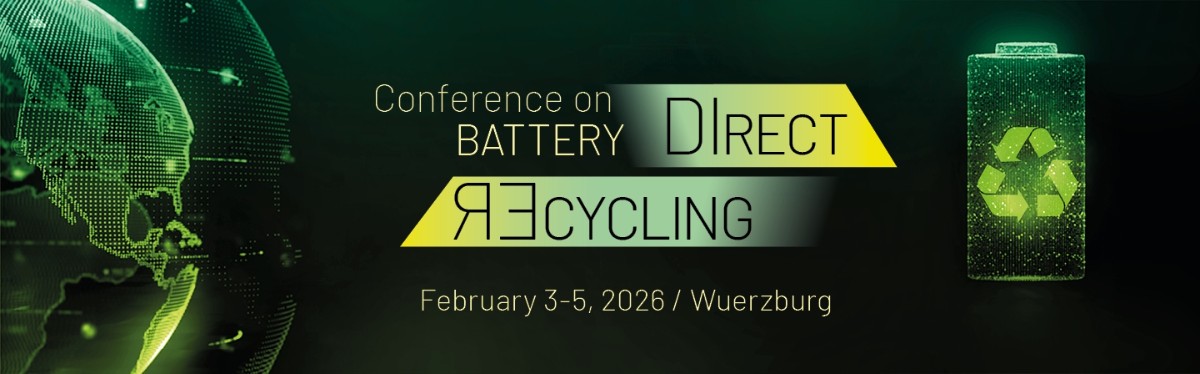
| | | Conference on Battery Direct Recycling 2nd Conference on Battery Direct Recycling 2026 February 3-5, 2026 Congress Centrum Wuerzburg
Direct recycling has the potential to play a key role in battery recycling in the future. As a complementary method to the more established recycling routes, direct recycling can contribute to the improved sustainability of the battery value chain and to enable the formation of a circular economy. The first “Conference on Battery Direct Recycling” took place at the Congress Centrum CCW in Würzburg from 29 to 30 October 2024. More than 150 participants from research and industry travelled to Lower Franconia to exchange ideas on the direct recycling of batteries and thus contributed to the start of a direct recycling battery community | | Views and opinions expressed are those of the author(s) only and do not necessarily reflect those of the European Union or the European Climate, Infrastructure and Environment Executive Agency (CINEA). Neither the European Union nor the granting authority can be held responsible for them. | | | |