BATTERY 2030+ at the heart of a green connected society | | | | | | Welcome to our new newsletter!The vision for BATTERY 2030+ is to invent the batteries of the future, providing European industry with disruptive technologies and a competitive edge across the full value chain, that will enable Europe to take the lead in battery science and technology.
This newsletter gives you an update on what's going on within the initiative. Enjoy your reading!
| | | |
A moment with our Director Patrik Johansson It has been an exciting Spring for me and I came in with quite some anxiety; How can I possibly deliver to the extent needed to the large community that Battery2030+ is? But I was soon realizing that I am so much supported by Kristina and others in the various CSA steering positions that I shouldn't have worried at all, that the team at UU gives all they can to make all things work as smoothly as possible, and most importantly - we are all of Battery 2030+ in this together as friends! Our mission is important for Europe's future and we are on the right track for sure. However, to increase our total energy throughput with our state-of-power not failing, some resting time and re-charging is needed - and that's what the Summer hopefully offers you all! | | | Battery 2030+ Annual Conference 2025
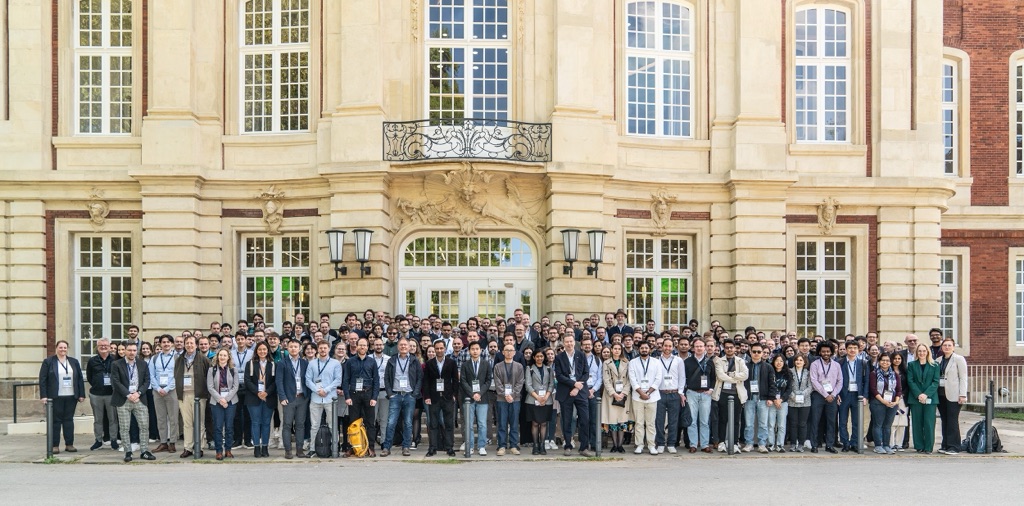
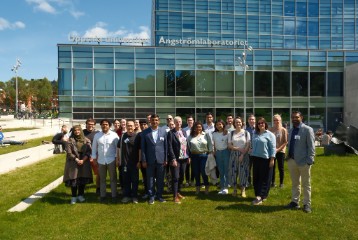
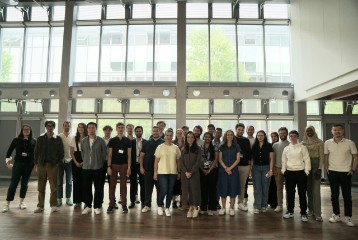
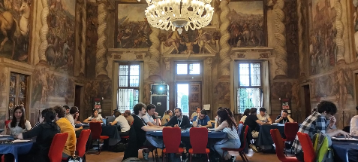
The 5th Battery 2030+ annual conference took place in Münster Germany in the
beginning of May. We would like to express our gratitude to Helmholtz Institute
in Münster and Martin Winter at the Forschungszentrum Jülich for hosting this
event and making it possible for us to gather our community. Our agenda included
scientific talks, an industry session, all our projects showcasing their
research and the renowned Maria Forsyth, who was the keynote speaker. We also had 8 poster pitches
and 4 oral presentations as well as sponsored poster prizes from EERA and
Chemistry Europe. There was plenty of time to network with key stakeholders
of the battery research community and engage in meaningful discussions during the
breaks and the gala dinner at the two day conference. | | | Battery 2030+ Excellence SeminarsIf you missed any of our fantastic seminars, do not fret! We have recorded them and you can watch them on our website. Click the button below and watch them all! | | | Supporting the Next Generation of Battery ResearchersA key focus of this year’s BATTERY 2030+ Conference in Münster was the promotion and visibility of young scientists within the international battery research community. Even before the official start of the event, early-career researchers had the opportunity to benefit from a dedicated publishing workshop held by Wiley Editor-in-Chief Dr. Rosalba Rincon Ovalles
| | | | | | | Battery 2030+ PublicationsAre you keeping up with all the publications from Battery 2030+ and our projects? We are constantly working on getting our research and results available. | | | The Second – Young Scientist Event (YSE)
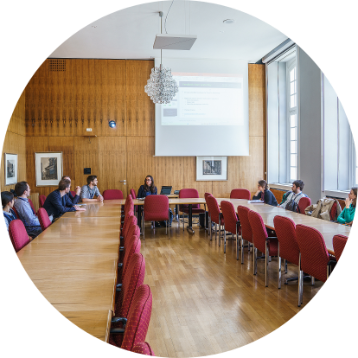
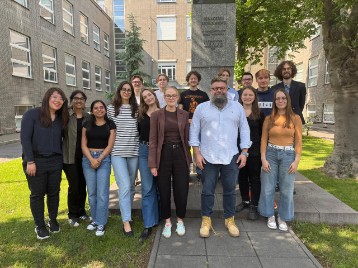
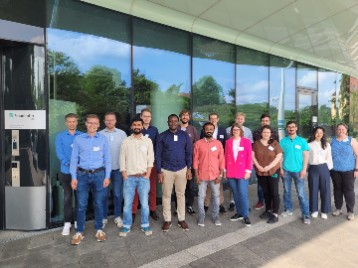
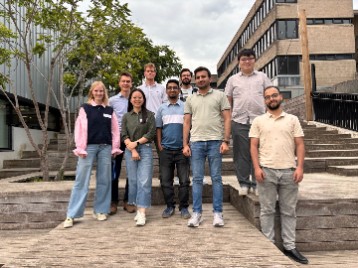
The Second – Young Scientist Event (YSE), took place on June 3rd. The YSE engaged young scientists to express their ideas about the future battery research landscape by providing their input on the BATTERY 2030+ roadmap and curricula. The invited speakers from industry, academia and policy presented in their different areas of expertis. The YSE was held simultaneously in these six locations, Politecnico di Torino (Italy), Uppsala University (Sweden), Vrije Universiteit Brussels (Belgium), Warsaw University of Technology (Poland), Université de Picardie Jules Verne (Amiens, France) and Fraunhofer ISC (Wurzburg, Germany). All locations connected online to allow for an open and inclusive discussion, resulting in disruptive research and innovation ideas from the new generation of scientists.
They focused on these areas, 1) Novelties in the battery area: e.g. solid-state batteries, Si-anodes, advanced lithium-ion batteries, smart functionalities, etc. 2) Sustainability, recycling, second life, circular economy, etc. 3) Industry and EU regulations, commercialisation of products, sustainable production processes, etc. The ground work for the new manifesto has already started and we are expecting to have it ready by the end of summer. | | | | | Catching up with our project Safeloop
Looking back at the first year of SAFELOOP, we
are well on our mission towards the development and testing innovative technologies
across all battery components, aiming to create a safe, sustainable, and
high-performance product. Safeloop’s unique selling point is the use of
recycled materials on each battery component to the maximum extent feasible
without compromising the battery’s efficiency and life cycle.
Partnership brings together industrial partners
and research organisations with expertise working on different cell components—
anode, cathode, electrolyte and separator — and will deliver a safe and robust
battery while exploring various recycled material candidates. Through the project,
these components will ultimately be combined within a unified architecture to
produce a reliable and environmentally friendly electric vehicle (EV) battery,
which will be installed in a 12-meter electric bus.
A major milestone achieved during year one of Safeloop, is its first scientific publication:
“Enhancing the Performance of Ni-Rich Li[Ni₀.₈₈Co₀.₀₉Mn₀.₀₃]O₂ Cathode
Material Using Surface Coating.” This is only the first of many steps—not
just towards producing innovative scientific research, but also towards the
commercialization of these innovations into a unique product that follows
eco-design guidelines, safety protocols, and top-end efficiency standards. | | | | | | | Battery 2030+ Roadmap Short Popular VersionThe roadmap for Battery 2030+ is a long term-roadmap for forward looking battery research in Europe.
| | | Catching up with our project InerrantThe
INERRANT (Integrating Novel Materials with Scalable Processes for Safer and
Recyclable Li-ion Batteries) project aims to establish new standards for safety
and sustainability in large-scale lithium-ion battery (LIB) production by
developing cutting-edge materials, advanced electrolyte formulations, and
environmentally friendly recycling methods. During the first year of the
project the partners of Inerrant have worked separately on optimising the
production methods for each battery component – the anode, the cathode, the
separator, and the electrolyte – overcoming challenges and developing
innovative materials and technologies. In the next phase of the project, we
will join forces to combine the optimised components and create safer and more
sustainable Gen 3 LIBs – to be used in mobility applications. Inerrant paves
the way for a greener and more secure future for mobility. | | | | | | Views and opinions expressed are those of the author(s) only and do not necessarily reflect those of the European Union or the European Climate, Infrastructure and Environment Executive Agency (CINEA). Neither the European Union nor the granting authority can be held responsible for them. | | | |